
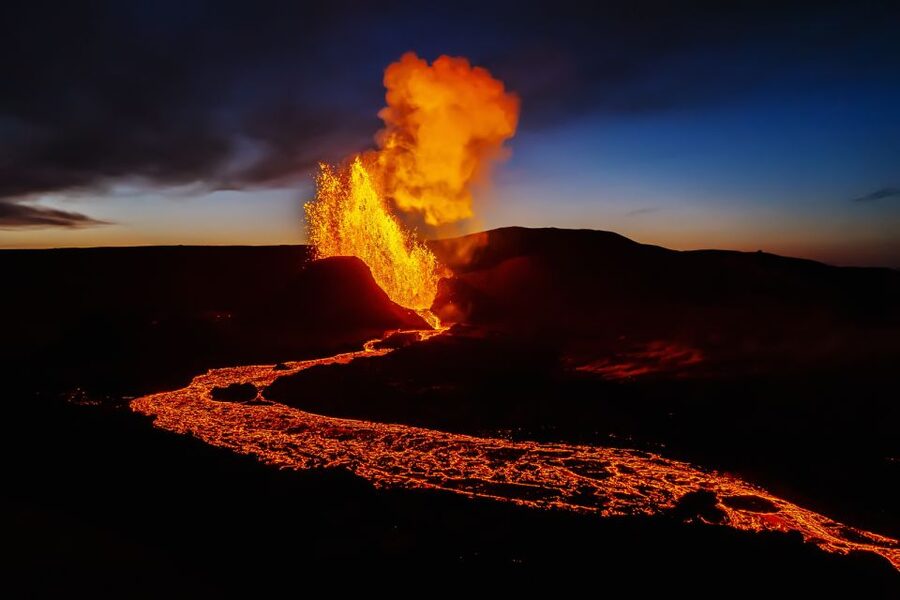
Review · ICELAND · VOLCANO & LAVA TOURS
Volcano Movie – Experience the Latest Eruptions in Iceland
Iceland’s volcanoes hit hard on the big screen. At the LAVA Centre in Hvolsvöllur, you watch a cinema film built around 4K video and Icelandic sound, with no vocal narration. The result feels less like a lecture and more like getting swept up in the scale of the island’s volcanic engine.
Two things I especially liked. First, the film’s eruption timeline lets you place major events in order, from Katla in 1918 through more widely known eruptions and onward to the latest activity. Second, before the movie even starts, you can grab free background info at the entrance on earthquakes in Iceland and the major volcanoes around the Lava Centre area.
One practical note: you cannot bring food and drinks into the cinema. Plan to eat outside the theater area, or use the on-site restaurant and shop at Katla, so your session stays stress-free.
In This Review
- Key takeaways before you buy your ticket
- Why this volcano film at LAVA Centre fits Iceland travel
- The 4K, no voice-over format: what it feels like in the theater
- The eruption timeline: Katla 1918 all the way to modern series
- Eyjafjallajökull in 2010: when eruption equals air travel chaos
- Holuhraun 2014-2015 and Grímsvötn 2011: magnitude without the noise
- Fagradalsfjall, or Fagradalseldar: what the latest eruptions teach
- Price, timing, and who this one-day cinema ticket is for
- Should you book Volcano Movie at LAVA Centre?
- FAQ
- Where is the meeting point for the Volcano Movie?
- How long is the Volcano Movie experience?
- What is the price per person?
- Is there vocal narration or voice-over in the film?
- What video quality is used?
- Can I bring food and drinks into the cinema?
- Is there somewhere to buy food at the center?
- What languages are available?
- Can I choose a starting time?
- Is the cinema wheelchair accessible?
Key takeaways before you buy your ticket
- 4K (or better) footage focused on the latest Iceland eruptions
- Sound-and-video storytelling with no voice-over narration
- A clear eruption timeline, from older classics like Katla and Hekla to modern series like Fagradalsfjall
- Big “what it meant” moments, including the 2010 air-traffic disruption from Eyjafjallajökull
- Free earthquake and nearby volcano info right at the entrance
Why this volcano film at LAVA Centre fits Iceland travel
If you are doing South Iceland and the Golden Circle, this is a smart indoor stop. It is one day, you pay an entrance fee of $16 per person, and you get a concentrated dose of volcano history and impact without needing special gear or a long drive into rough conditions.
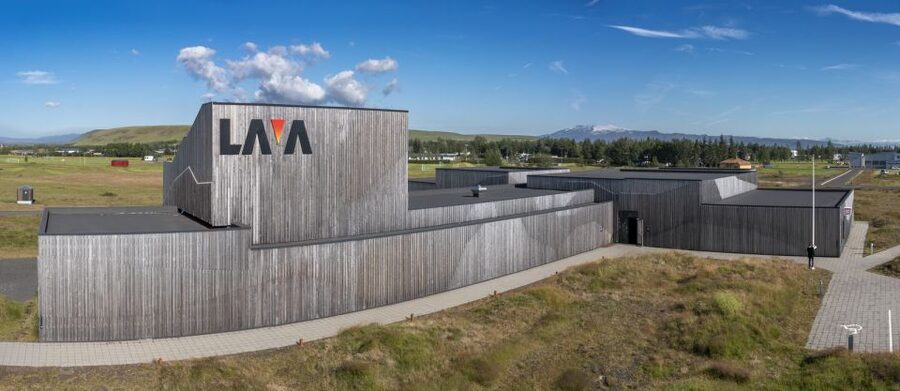
The meeting point is easy to find: it is the first building on the left when you come from Reykjavík or the Golden Circle. You cannot miss it, since it is part of the LAVA Centre complex at Austurvegur 14, 860 Hvolsvöllur. For me, that matters because Iceland days can get eaten by weather and timing. This is the kind of activity that stays simple even when the sky changes its mind.
I also like the setting because the center does more than run a movie. At the entrance, there is free information on earthquakes in Iceland and the major volcanoes surrounding the Lava Centre. That helps you arrive with context, so you are not just watching dramatic visuals. You are also learning what kind of volcanic forces you are looking at.
The movie itself is designed to explain magnitude and effects on the people of a rugged island. Even though the format is cinematic, the goal is practical understanding: what eruptions are, how often Iceland sees them (on average every 4 to 5 years), and how different eruptions can shape normal life in very different ways.
More Volcano & Lava Tours in Iceland:
- Reykjavik: LAVA SHOW – Immersive Experience Entry Ticket
★ 4.8 · 3,360 reviews - Lava Show Reykjavik Admission Ticket – Optional Premium Upgrade
★ 5.0 · 3,278 reviews - Golden Circle with Kerid Volcanic Crater Day Tour from Reykjavik
★ 4.5 · 2,826 reviews
The 4K, no voice-over format: what it feels like in the theater
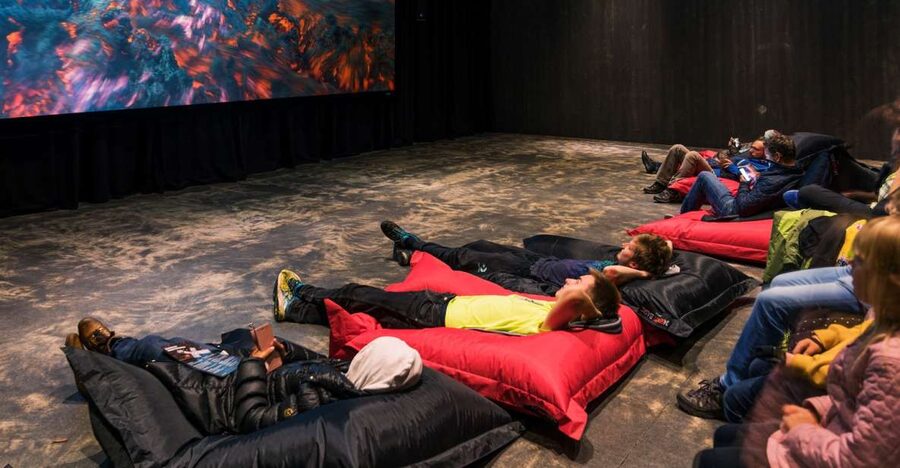
The biggest design choice here is the lack of vocal narration. Instead of a presenter talking over the footage, you get only video and sound. That means you react to scale through audio and visual pacing, which is a very Iceland-style way to tell a story. It is dramatic, but it is not trying to be a theater gimmick.
The quality is also a major part of the experience. The film says it uses only the highest possible quality, shot in 4K or better. In practical terms, that matters because volcano visuals can look vague when the resolution is low. Here, you can track the motion and intensity better, and you spend less time guessing what you are seeing. You simply watch it unfold.
Another thing I appreciated is that the storytelling is still structured. It starts with an overview of historic eruptions in Iceland, then moves to more recent events, including the ones that became globally discussed. Even without a guide’s voice in the room, you get a clear sequence that connects older eruptions to newer ones.
If you are sensitive to heavy narration or you learn best by watching, this format will click. If you prefer a spoken explanation throughout, you might find it a bit more abstract, since there is no voice-over running the whole time.
The eruption timeline: Katla 1918 all the way to modern series
The film begins with a historical overview, using a timeline you can follow. It starts with Katla in 1918, then moves on to Hekla in 1947, Askja in 1961, Surtsey in 1963, the Westman Islands in 1973, Krafla in 1975, and many more. That broad sweep is not random. It is meant to show you that volcanic activity is not a one-off event in Iceland. It is part of the island’s long-term rhythm.
What I like about this setup is that it keeps you from thinking of volcanoes as a single headline. You see multiple systems and eras, and you come away with a more realistic sense that the island’s volcanic behavior has many faces.
This is also where the earthquake and volcano info at the entrance pays off. Before the theater darkens, you have a chance to read about earthquakes in Iceland and the major volcanoes near the Lava Centre. Then when the film jumps into eruption history, it feels less like you are starting from zero.
The timeline also sets up why the later, well-known eruptions matter. When the film finally reaches the 2010 events and beyond, you already have a mental framework for what the word eruption means in Iceland. You also understand why some eruptions get attention worldwide while others remain less noticed.
Eyjafjallajökull in 2010: when eruption equals air travel chaos
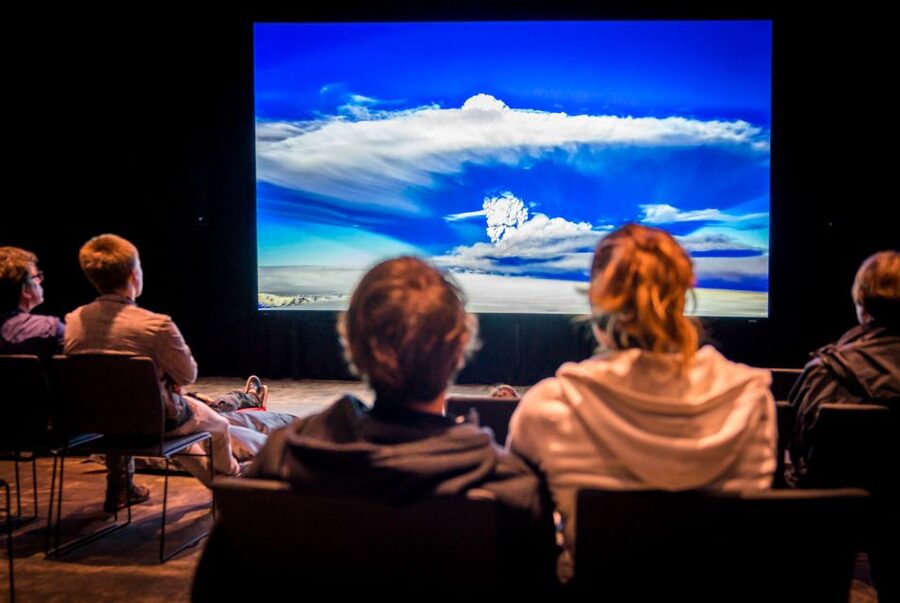
The movie does a great job choosing a turning point that most people can picture: 2010. It covers the Fimmvörðuháls eruption followed by Eyjafjallajökull, and it does not treat them like isolated science facts. Instead, it explains the real-world consequence people felt across Europe.
The key detail here is that Eyjafjallajökull blocked air traffic in Europe for days in 2010. That is the kind of impact that reaches beyond local communities. Even if you were not in Iceland at the time, you likely remember how volcano disruptions can ripple outward.
In the theater, this part of the film feels especially intense because it is not just showing eruption visuals. It is linking the eruption to daily systems: movement, logistics, and schedules. That is what makes the moment stick. You leave with a better understanding of how volcanic activity can reshape life far from the crater.
I also think this segment is valuable if you are traveling with limited time. When you are planning road trips around Iceland, it helps to know that eruptions are not only about dramatic scenes. They can also create uncertainty for flights and travel plans.
A different sort of day out in Iceland:
- Reykjavik: Golden Circle Full-Day Tour with Kerid Crater
★ 4.8 · 24,485 reviews - Reykjavik Food Walk – Local Foodie Adventure in Iceland
★ 5.0 · 18,952 reviews - From Reykjavik: Northern Lights Bus Tour with Hot Cocoa
★ 4.3 · 13,947 reviews - Reykjavík: South Coast Waterfalls, Black Sand & Glacier Tour
★ 4.8 · 11,030 reviews
Holuhraun 2014-2015 and Grímsvötn 2011: magnitude without the noise
After 2010, the film keeps going with more eruptions that shaped Iceland, including Grímsvötn in 2011 and the massive Holuhraun eruption in 2014-2015. The movie highlights something important: Holuhraun was so large, yet the world did not hear about it.
That contrast is the point. Iceland can be erupting on a scale that feels enormous, but global attention is not guaranteed. You get a clearer sense of how information, geography, and timing can affect what people around the world know. In other words, not all major eruptions become international news, even when their magnitude is massive.
I like that the film does not just chase the most famous names. It tries to broaden your sense of what matters. Holuhraun gives you that reality check, and it reinforces the film’s overall message about magnitude and effects on residents.
The best part is the way this content fits the no-voice-over approach. You are not being told what to think with constant commentary. You are being shown the story, and the film uses sound and visual impact to do the convincing. It makes the “why you should care” feel more immediate.
Fagradalsfjall, or Fagradalseldar: what the latest eruptions teach
The movie finishes with the latest eruption series, called Fagradalsfjall, or Fagradalseldar. The film presents these as part of the ongoing story of Iceland’s volcanic activity, not as isolated events that you can file away and forget.
From a travel perspective, this is the section that helps the experience feel current. Iceland’s volcano headlines have continued into recent years, and the film closes the loop by bringing you from historic eruptions into the most recent activity. If you like understanding what you are seeing in Iceland today, this ending matters.
It also fits with the film’s overall goal: you leave with a better understanding of the scale of eruptions and what they do to life on the island. The latest eruption series is where that theme lands, because it makes the volcanic process feel alive and ongoing, rather than trapped in museum cases.
If you are the type who likes to connect your trip to present-day issues, you will probably enjoy this closer. It turns the experience from a history lesson into something with a pulse.
Price, timing, and who this one-day cinema ticket is for
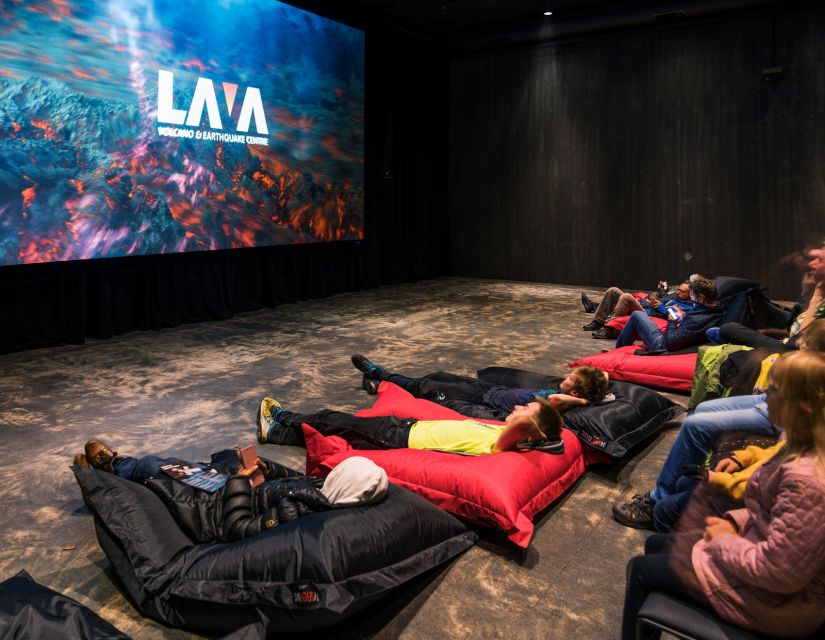
At $16 per person for a 1-day visit, you are paying for a focused cinema experience at the LAVA Centre. The included item is the entrance fee to the cinema. There is no food included, but you can buy food at Katla, the in-house restaurant, and there is also a shop.
That last detail is worth planning for. Since food and drinks are not allowed inside the cinema, it is easiest to eat before or after you watch. If you wait too long, you may end up handling it mid-day with less flexibility.
The value here is the combination of quality and scope. You get 4K or better footage, sound design, and an eruption story that runs from Katla in 1918 to modern eruptions in the Fagradalsfjall series. That is a lot of ground for one ticket.
Also, this is not a small, specialized workshop. It is a wheelchair accessible cinema experience, and there is an English and Icelandic host or greeter at the center. If you are traveling as a couple, a solo traveler, or with someone who prefers indoor activities, this fits well.
One more note: the experience rating sits at 3.6 based on 3 reviews, so the sample size is small. I still think the concept is strong, especially if you want a compact, weather-proof way to learn eruption stories without spending a whole day outside.
Should you book Volcano Movie at LAVA Centre?
Book it if you want an indoor stop that connects Iceland’s volcanoes across decades, from Katla and Hekla to Eyjafjallajökull and the latest Fagradalsfjall eruptions. The no voice-over style plus 4K footage and sound makes it feel like you are experiencing the drama instead of just reading about it.
Skip it if you are hoping for a guided, spoken explanation in the theater, or if you strongly prefer bringing your own snacks and drinks into the viewing room. Since food and drinks are not allowed in the cinema, it is easier when you can plan meals around the theater time.
FAQ
Where is the meeting point for the Volcano Movie?
The meeting point is at LAVA Centre, Austurvegur 14, 860 Hvolsvöllur, Iceland. It is the first building on the left when coming from Reykjavík or the Golden Circle.
How long is the Volcano Movie experience?
The experience is listed as 1 day.
What is the price per person?
The price is $16 per person.
Is there vocal narration or voice-over in the film?
No. The film has no vocal narrative, only video and sound.
What video quality is used?
The film uses only footage in the highest possible quality, shot in 4K or better.
Can I bring food and drinks into the cinema?
No. Food and drinks are not allowed.
Is there somewhere to buy food at the center?
Yes. You can buy food at Katla, the in-house restaurant, and there is also a shop.
What languages are available?
The host or greeter is available in English and Icelandic, and those are the listed languages for the experience.
Can I choose a starting time?
Yes. Starting times depend on availability, so you will need to check when you book.
Is the cinema wheelchair accessible?
Yes. The experience is wheelchair accessible.
Recently added around Iceland
- Reykjavik: Whale & Marine Adventure Tour★ 4.3 · 71 reviews
- Reykjavik: Whale Watching & Lava Show★ 5.0 · 4 reviews
- West Glacial River Family Rafting★ 5.0 · 9 reviews
- Reykjavík: Horse Riding Tours★ 4.9 · 127 reviews
- Vestmannaeyjar: Puffin, Island, and Volcano Boat Tour★ 4.4 · 7 reviews
- From Reykjavík: Viking Horseback Tour in Hafnarfjörður★ 4.9 · 112 reviews
- Vestmannaeyjar: Heimaey Island Round Boat Tour★ 4.8 · 27 reviews
- Vestmannaeyjar: One Hour Small Islands Trip★ 4.6 · 11 reviews
Volcano & Lava Tours, compared.
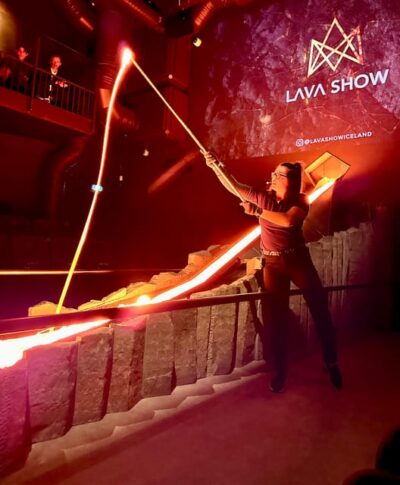
LAVA SHOW – Immersive Experience Entry Ticket
Read our review →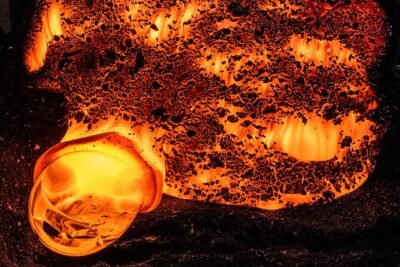
Lava Show Reykjavik Admission Ticket – Optional Premium Upgrade
Read our review →
Golden Circle with Kerid Volcanic Crater Day Tour from Reykjavik
Read our review →
Golden Circle, Volcano Crater and Blue Lagoon Small-Group Tour
Read our review →
Raufarhólshellir Lava Tunnel: Underground Expedition
Read our review →
Browse the lists this tour appears in