
Review · ICELAND · CITY TOURS
Reykjavík Interactive City Tour
Reykjavik turns into a story when your phone talks. This interactive city tour strings together 16 free, outdoor stops with an English audioguide, plus quizzes at each point. It is built for a simple walk that covers the core between old churches, parliament buildings, harbor views, and Reykjavík’s most famous skyline landmark.
I really like two things about this tour format: it is easy to follow without a physical guide, and the route mixes big-picture civic history with small street-level details. You get recorded video and a walking map with directions that help you keep moving, even if the weather has you moving fast.
One drawback to consider: it is still a walk. If you prefer super dense commentary every minute, the short pauses and light storytelling per stop might feel thin, and you will need phone internet since offline access is not included.
In This Review
- Key takeaways before you go
- What you are really paying for: $8.47 worth of self-guided Reykjavik
- Included basics that matter on a city walk
- Starting at Dómkirkjan: how the route pacing works
- Practical phone setup that will keep you from getting stuck
- Old Town anchors: Dómkirkjan, Parliament, and Aðalstræti 10
- Stop 1: Dómkirkjan í Reykjavík
- Stop 2: Iceland’s Parliament Building, 43W5+MWW area
- Stop 3: Aðalstræti 10, an old house you can still picture
- Lækjargata’s concrete story, then Bankastræti’s city shift
- Stop 4: Lækjargata, Iceland’s oldest concrete structure
- Stop 5: Bankastræti, from fishing village to capital
- Colorful streets, the rainbow path, and the Hallgrímskirkja viewpoint
- Stop 6: Skólavörðustígur murals and the rainbow path
- Stop 7: Vesturgata 2 and Reykjavík Gate views
- Down by the water: Reykjavík Stone Pier, sculpture moments, and Eyjarslóð 9
- Stop 8: Steinbryggja (Stone Pier) and seafaring sculptures
- Stop 9: Laugavegur street art and crafts
- Stop 10: Aðalstræti 15 and Bailiff’s Garden calm
- Stop 11: Eyjarslóð 9 and harbor plus mountains
- Art and myth in the sculpture garden: Njarðargata 51
- Stop 12: Njarðargata 51 and Einar Jónsson’s works
- Hallgrímskirkja facade and Grjótagata folklore
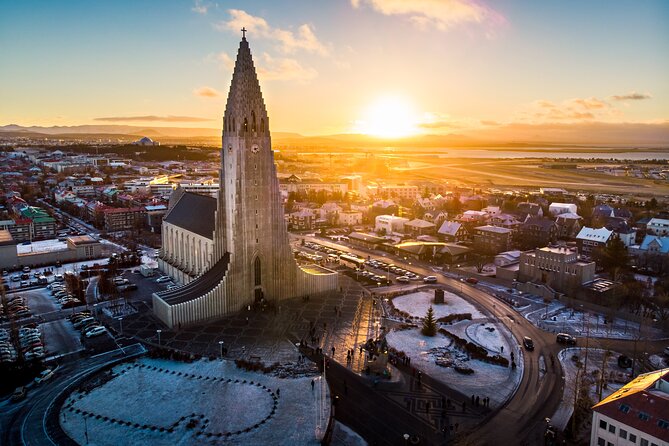
- Stop 13: Hallgrímskirkja, why the facade looks the way it does
- Stop 14: Grjótagata and the hidden folk
- Ingólfstorg Square origins, then Harpa and the New Synagogue finish
- Stop 15: Austurstræti 4 at Ingólfstorg Square
- Stop 16: 101 and Harpa’s glass facade
- When this tour fits best, and when it might not
- Should you book the Reykjavik Interactive City Tour?
- FAQ
- How much does the Reykjavik Interactive City Tour cost?
- How long is the tour?
- Is this tour guided by a person?
- Do I need an app to use the tour?
- Can I use it offline?
- What languages are available?
- Where does the tour start and end?
- Are entrance fees included?
Key takeaways before you go
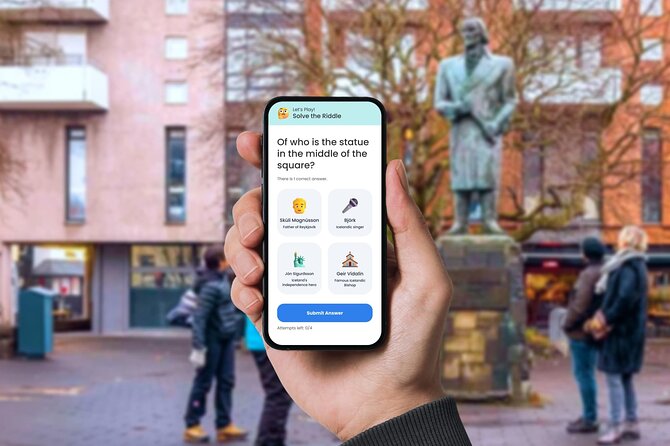
- Smartphone audioguide with quizzes at each stop, so you stay on track
- No separate app needed, just use your phone for the guided route
- 16 outdoor stops, all free to pause at, no ticket lines on the route
- Route runs in short 5-minute segments, great for pacing your sightseeing
- End at Harpa (101 Reykjavík), with the route description also pointing toward the New Synagogue as a meaningful finish
What you are really paying for: $8.47 worth of self-guided Reykjavik

At $8.47 per person for about 1 hour 45 minutes, this tour is priced like a practical tool, not a guided lecture. You are paying for the structure: a preplanned walking route, audio content in English, and interactive moments (quizzes) that keep the experience from turning into just scenery scrolling.
The value gets better because the tour is made of stops where you do not need entrance tickets. Most points are designed for quick pauses outside major sights, which means you can keep your time and budget under control. That matters in Reykjavik, where weather can change your plans fast and every extra paid admission can start to feel like a gamble.
You also get a private tour setup. It is listed as private, meaning only your group participates, which can be a plus if you are traveling with friends or family and want to move at your own speed without waiting on others.
A few more Reykjavik trips worth comparing
- Reykjavik: City Sightseeing Hop-On Hop-Off Bus Tour
★ 3.9 · 1,283 reviews - Reykjavík City Card
★ 4.3 · 964 reviews - City Sightseeing Reykjavik Hop-On Hop-Off Bus Tour: 24 or 48-Hour
★ 3.0 · 839 reviews
Included basics that matter on a city walk
You should expect:
- A self-guided smartphone route (no physical guide)
- Audioguide with quizzes at each stop
- Recorded video explanations tied to points of interest
- Multiple languages available, including English, Deutsch, Italiano, Français, Español, Português, 中文
Just remember the “fine print” that affects your day: the tour is not offline. Internet is needed on your phone, so plan on having data or reliable connectivity.
Starting at Dómkirkjan: how the route pacing works
The meeting point is Dómkirkjan í Reykjavík on Kirkjustræti in downtown Reykjavík. From there, you follow a walk broken into short segments, with each stop designed around about 5 minutes of looking and listening.
That pacing is the whole idea behind “interactive city tour” in Reykjavik. You get a steady rhythm:
- Pause outside the sight
- Watch or listen to the explanation
- Answer the quiz tied to that point
- Walk to the next location
It is built for travelers who want to keep moving, not for people who want to linger for an hour in one place. If your travel style is fast and focused, this will feel efficient. If your style is slow, take your time anyway, but just expect you might extend beyond 1 hour 45 minutes.
Practical phone setup that will keep you from getting stuck
Because the tour is smartphone-based and internet is required, I suggest you:
- Start with a charged phone battery
- Bring headphones or use a comfortable speaker volume if you are traveling with others
- Keep an eye on your connection, especially if you lose service in tighter downtown corners
Also, the good news: an app is not required. That reduces friction when you are trying to get going quickly after check-in or arrival.
A different sort of day out in Iceland:
- Reykjavik: Golden Circle Full-Day Tour with Kerid Crater
★ 4.8 · 24,485 reviews - Reykjavik Food Walk – Local Foodie Adventure in Iceland
★ 5.0 · 18,952 reviews - From Reykjavik: Northern Lights Bus Tour with Hot Cocoa
★ 4.3 · 13,947 reviews - Reykjavík: South Coast Waterfalls, Black Sand & Glacier Tour
★ 4.8 · 11,030 reviews
Old Town anchors: Dómkirkjan, Parliament, and Aðalstræti 10
The first stretch is about getting your bearings in Reykjavík’s central core, and it uses three stops to do the job fast.
Stop 1: Dómkirkjan í Reykjavík
You pause outside Reykjavík Cathedral (Dómkirkjan í Reykjavík). The audio focuses on its simple, charming look and why it matters as Iceland’s first Lutheran church. It also explains how the church connects to Iceland’s wider history, not just local worship.
This is a smart opener. Even if you are not a church person, it gives you a timeline hook right away, so later government buildings and civic sites feel connected instead of random.
Stop 2: Iceland’s Parliament Building, 43W5+MWW area
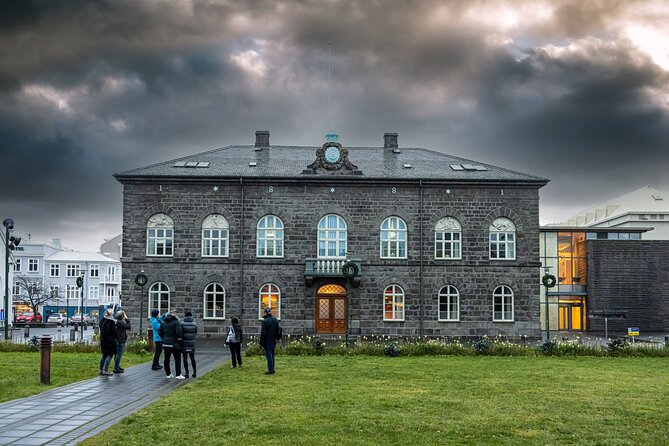
Next comes the story behind the distinctive stone facade of Parliament and its role in shaping Iceland’s independence. Even standing outside, you can treat this like a “how modern Iceland formed” stop rather than just another official building.
This stop works well because it connects architecture to political change. You start seeing stone, walls, and placement as symbols, not just backdrops.
Stop 3: Aðalstræti 10, an old house you can still picture
At Aðalstræti 10, you stand outside one of Reykjavík’s oldest houses. The tour asks you to imagine early city life, then frames the building as something that has lasted through centuries as the city’s center transformed around it.
This is the kind of stop that makes a self-guided tour worth it. Without someone talking, it can be easy to walk past an old facade. With the audio content, you know what to look for and why the age of the structure matters.
Lækjargata’s concrete story, then Bankastræti’s city shift
After those historical anchors, the tour leans into “how Reykjavík grew,” using government power, infrastructure, and street-level change.
Stop 4: Lækjargata, Iceland’s oldest concrete structure
You pause at Lækjargata for the historic building described as Iceland’s oldest concrete structure. The guide content ties it to multiple roles, including as the Prime Minister’s office and also as a prison in the past.
This is one of the more compelling stops on the route because it forces you to notice that one building can carry very different meanings over time. If you like contrasts, you will enjoy the way the audio points out details you might otherwise ignore.
Stop 5: Bankastræti, from fishing village to capital
At Bankastræti, you walk along a lively downtown street and learn about Reykjavík’s transformation from a small fishing village to the capital of Iceland.
Even though the tour time at each stop is short, this is a key thread. It helps you interpret the streets you are actually walking on, instead of treating each stop like a separate postcard.
Colorful streets, the rainbow path, and the Hallgrímskirkja viewpoint
Now the route becomes more “walkable fun,” with art, color, and that famous church view built into the route.
Stop 6: Skólavörðustígur murals and the rainbow path
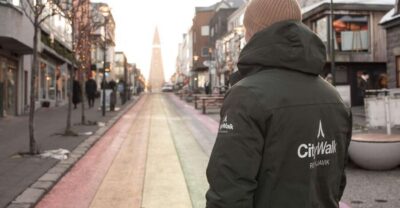
You stroll down Skólavörðustígur, described as famous for artistic murals and boutiques. The route highlights the rainbow path, and it sets up a payoff view of Hallgrímskirkja at the end of the street.
This is where you start enjoying the city as you walk it, not just learning from it. The audio helps you notice what you would otherwise treat as decoration.
Stop 7: Vesturgata 2 and Reykjavík Gate views
At Vesturgata 2, you stand by the Reykjavík Gate and take in the view of the old harbor. The tour connects the gateway to maritime history and to how this opening into town shaped Reykjavík’s past.
This stop is a good breather. You are outside, the direction is clear, and the audio gives you a reason to look around beyond the immediate buildings.
Down by the water: Reykjavík Stone Pier, sculpture moments, and Eyjarslóð 9
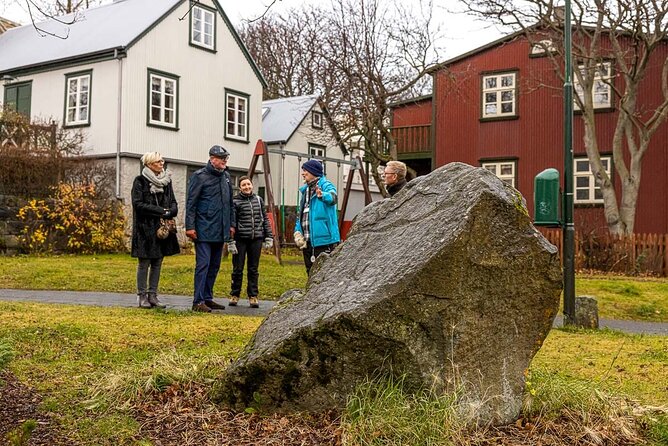
Reykjavík’s harbor area is where the city feels most connected to nature and work. This tour uses the waterfront to give you long sightlines, then breaks them into story-sized pieces.
Stop 8: Steinbryggja (Stone Pier) and seafaring sculptures
You stroll along Steinbryggja, the Stone Pier, and get views of Reykjavík’s coastline. The route also points out sculptures lining the path, each tied to a different story of Iceland’s seafaring heritage.
This stop is valuable because it turns a promenade into a timeline. Instead of drifting, you have little prompts to focus on what each sculpture is telling you.
Stop 9: Laugavegur street art and crafts
At Laugavegur, you walk through the city’s well-known shopping street. The audio calls out colorful street art and encourages you to spot local Icelandic crafts and small cafes along the way.
This is a practical stop, not just a scenic one. If you need a snack break or want to browse quickly without planning a separate detour, this is where it fits.
Stop 10: Aðalstræti 15 and Bailiff’s Garden calm
You head to Aðalstræti 15 for the Bailiff’s Garden. It is described as peaceful, with charming pathways and native Icelandic flora. The tour ties the garden to the history of old Reykjavík settlements.
If the earlier parts feel city-dense, this is a nice reset. It also helps the route feel varied rather than one long line of buildings.
Stop 11: Eyjarslóð 9 and harbor plus mountains
At Eyjarslóð 9, you stroll along Reykjavík Harbour and look toward surrounding mountains. The audio brings in tales of Icelandic fishing heritage and explains why this port matters to Reykjavík’s culture.
This stop is especially good for photos. Even if you do not take many pictures, it helps your brain understand the city’s relationship to water.
Art and myth in the sculpture garden: Njarðargata 51
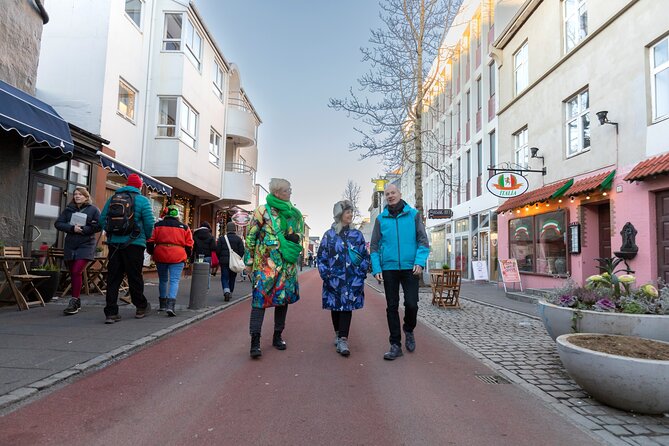
Stop 12 is where the tour slows mentally even if it keeps you walking physically.
Stop 12: Njarðargata 51 and Einar Jónsson’s works
At Njarðargata 51, you walk through a serene sculpture garden connected to Einar Jónsson. The guide content focuses on myths and stories behind his captivating works of art.
This is a smart placement. After government, harbor, and church viewpoints, the route gives you a creativity and storytelling angle. If you like art with a narrative layer, you will appreciate that the audio ties the sculptures to meaning, not just names and dates.
Hallgrímskirkja facade and Grjótagata folklore
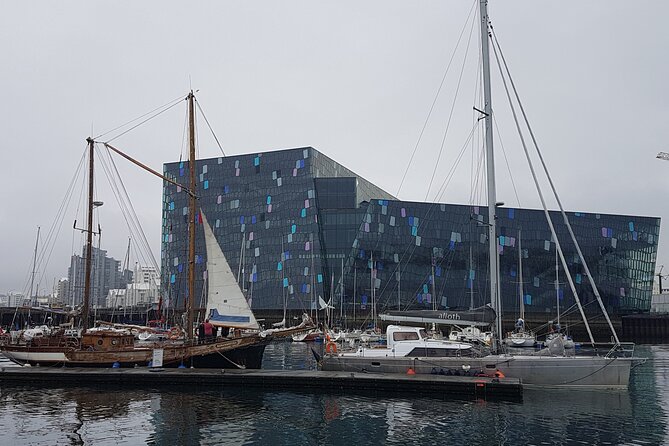
Two of the last city highlights are about fame and folklore, and they help you finish the walk with variety.
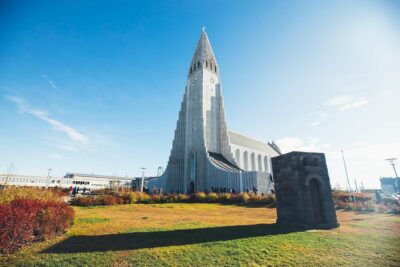
Stop 13: Hallgrímskirkja, why the facade looks the way it does
You admire the striking facade of Hallgrímskirkja, one of Reykjavík’s iconic landmarks. The audio explains the inspiration behind its unique architecture and gives you views over the city.
This stop is usually the big visual anchor for people on a tight schedule. Even without going inside, the tour helps you read the building’s design rather than just admiring it as a silhouette.
Stop 14: Grjótagata and the hidden folk
Next is Grjótagata, where the tour shares local tales about hidden folk believed to live within it, grounded in Icelandic folklore.
Folklore stops are quick, but they add personality. This one helps you understand why Reykjavík feels like more than a modern city. It still carries old stories in the streets.
Ingólfstorg Square origins, then Harpa and the New Synagogue finish
The final stretch ties the tour together. You return to origins, then end at a modern cultural icon.
Stop 15: Austurstræti 4 at Ingólfstorg Square
At Ingólfstorg Square (Austurstræti 4), the audio explains Reykjavík’s origins through its first settler, Ingólfur Arnarson. You are also prompted to notice nearby sculptures and murals that celebrate Icelandic heritage and history.
This is a strong “wrap your head around the city” stop. After seeing government buildings, harbor work, art, and church architecture, you now get the origin story thread.
Stop 16: 101 and Harpa’s glass facade
Finally you arrive at Harpa at 101 Reykjavík. The tour highlights its glass facade, inspired by basalt formations, and explains why it matters in Reykjavík’s cultural scene.
The description also notes ending your journey at the New Synagogue, described as a powerful symbol of resilience and remembrance. Since your official end point is listed as Harpa, your best move is to use your phone map to confirm the exact route to that finish landmark so you do not waste time walking the wrong way.
When this tour fits best, and when it might not
This is best for you if:
- You want a low-cost way to cover a lot of downtown Reykjavík in about 1 hour 45 minutes
- You like self-guided structure, with audio that tells you what to look at
- You enjoy light interaction like quizzes, instead of just passive listening
- You are okay with short pauses and a brisk pace through central areas
It might not fit as well if:
- You hate walking. The route is long enough that some visitors may feel it is more exercise than discovery.
- You expect thick, minute-by-minute storytelling at every stop. The tour gives enough to move you along, but it is not built to satisfy deep researchers.
A good strategy: come with an open mind, but also pick one or two “anchor sights” you care about most (Hallgrímskirkja and the harbor area are natural choices). Then treat everything else as helpful context.
Should you book the Reykjavik Interactive City Tour?
If your goal is to get orientated fast and learn the meaning behind Reykjavík’s biggest visuals without paying for admissions, I think this tour is a strong buy at $8.47. The biggest strengths are the easy phone-based guidance, the walking map and recorded video, and the fact that the route is made of free outdoor stops with quick story bursts and quizzes.
But be honest with yourself about walking pace and phone reliance. Since internet is required and the route is designed as a steady walk, you will enjoy it most if you bring charged devices, comfortable shoes, and patience for short, stop-by-stop explanations.
If that sounds like your travel style, hit book, grab your headphones, and let the city guide itself one 5-minute moment at a time.
FAQ
How much does the Reykjavik Interactive City Tour cost?
The price is $8.47 per person.
How long is the tour?
It runs for about 1 hour 45 minutes.
Is this tour guided by a person?
No. It is self-guided on your smartphone, and there is no physical guide.
Do I need an app to use the tour?
No app is needed. The tour is self-guided on your smartphone with no app required.
Can I use it offline?
No. Internet is needed on your phone. Offline access is not included.
What languages are available?
The tour audioguide is available in English, Deutsch, Italiano, Français, Español, Português, and 中文.
Where does the tour start and end?
It starts at Dómkirkjan í Reykjavík (Kirkjustræti, 101 Reykjavík) and ends at Harpa (101 Reykjavík). The route description also references ending your journey at the New Synagogue.
Are entrance fees included?
No. Tickets or entrance fees for attractions are not included. The listed stops are presented as free to pause at.
Recently added around Reykjavik
- Reykjavik: Whale & Marine Adventure Tour★ 4.3 · 71 reviews
- Reykjavik: Whale Watching & Lava Show★ 5.0 · 4 reviews
- Reykjavík: Horse Riding Tours★ 4.9 · 127 reviews
- From Reykjavík: Viking Horseback Tour in Hafnarfjörður★ 4.9 · 112 reviews
- Luxury Private Transfer from Reykjavik to Keflavik Airport★ 5.0 · 9 reviews
- Day Trip to Snæfellsness Peninsula from Reykjavik★ 5.0 · 7 reviews
- Winter South Coast Day Tour by Minibus from Reykjavik★ 5.0 · 109 reviews
- Whales Of Iceland Admission Ticket★ 4.0 · 239 reviews
City Tours, compared.
City Sightseeing Reykjavik Hop-On Hop-Off Bus Tour: 24 or 48-Hour
Read our review →
City Walking tour in Small Group with Local Guide
Read our review →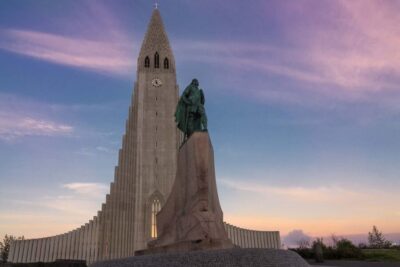


Browse the lists this tour appears in